

A C&G Partners project for the past two decades, the donor-funded National Museum of American Diplomacy (NMAD) has reopened to the public, an updated institution totally devoted to the history, practice and challenges of American diplomacy. The revamped building, with architecture by Beyer Blinder Belle with exhibition design by C&G Partners, stands as one of very few cultural institutions devoted to the peaceful resolution of conflict. The museum sits within a 20,000-square-foot glass-and-steel extension that now serves as the main entrance to the original portion of the historic Marshall Wing at the Harry S. Truman Building.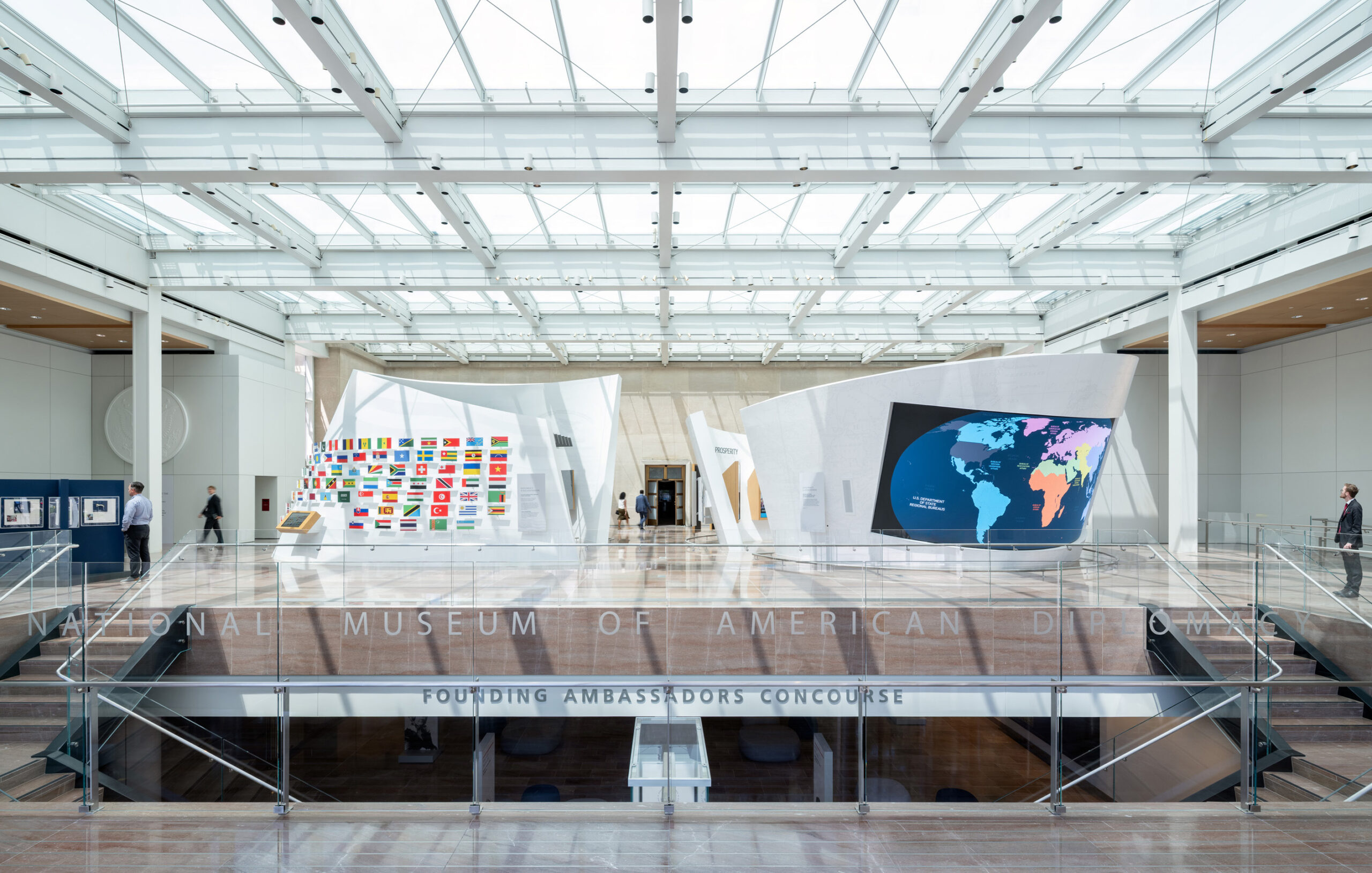
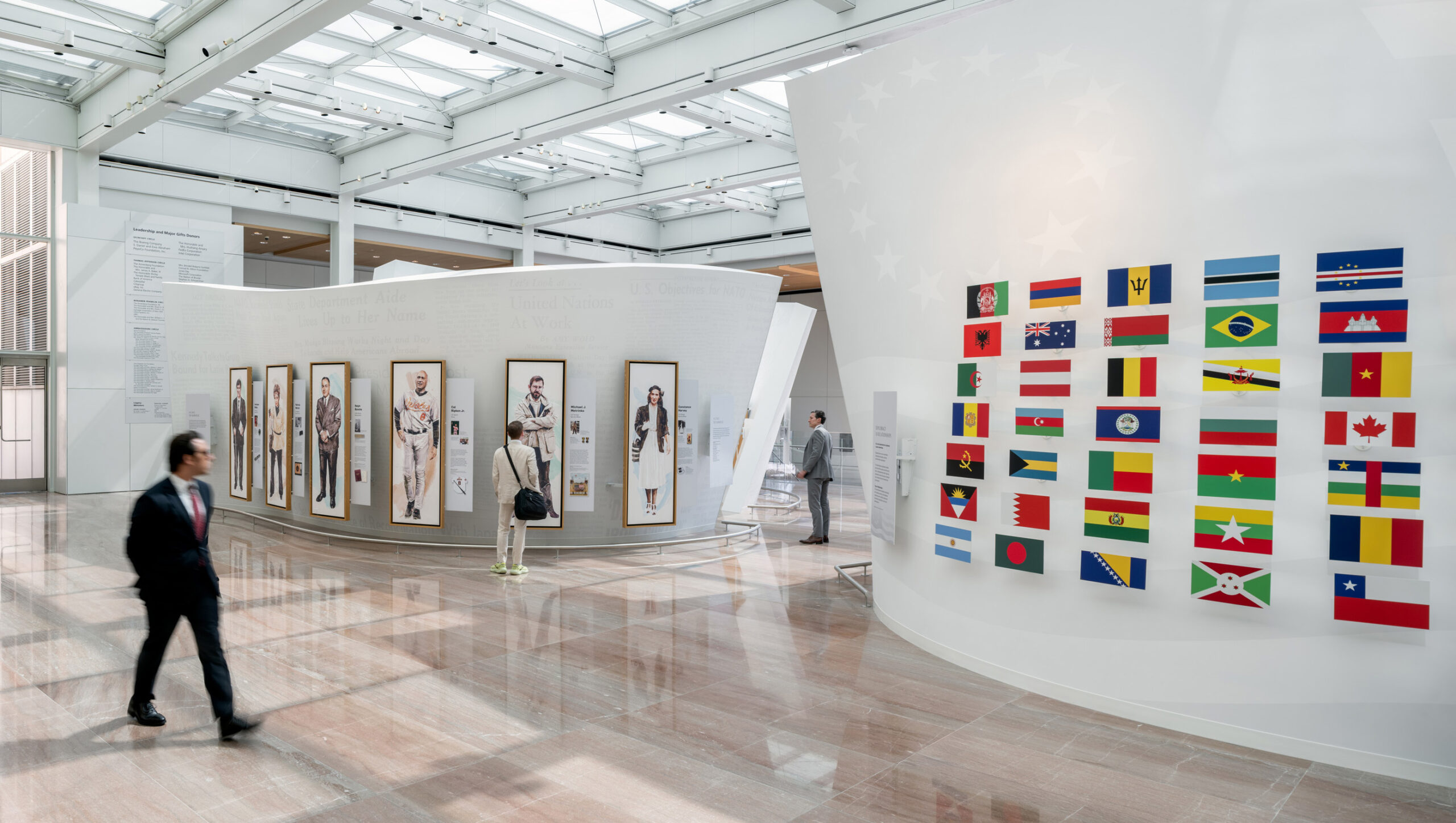
C&G Partners led the exhibition design for the project, developing an experience around a central question: What is diplomacy? Visitors encounter the people, places, documents, objects, and networks through which diplomatic relationships are created and sustained, introducing diplomacy not as an abstract institution but as an active, ongoing practice.
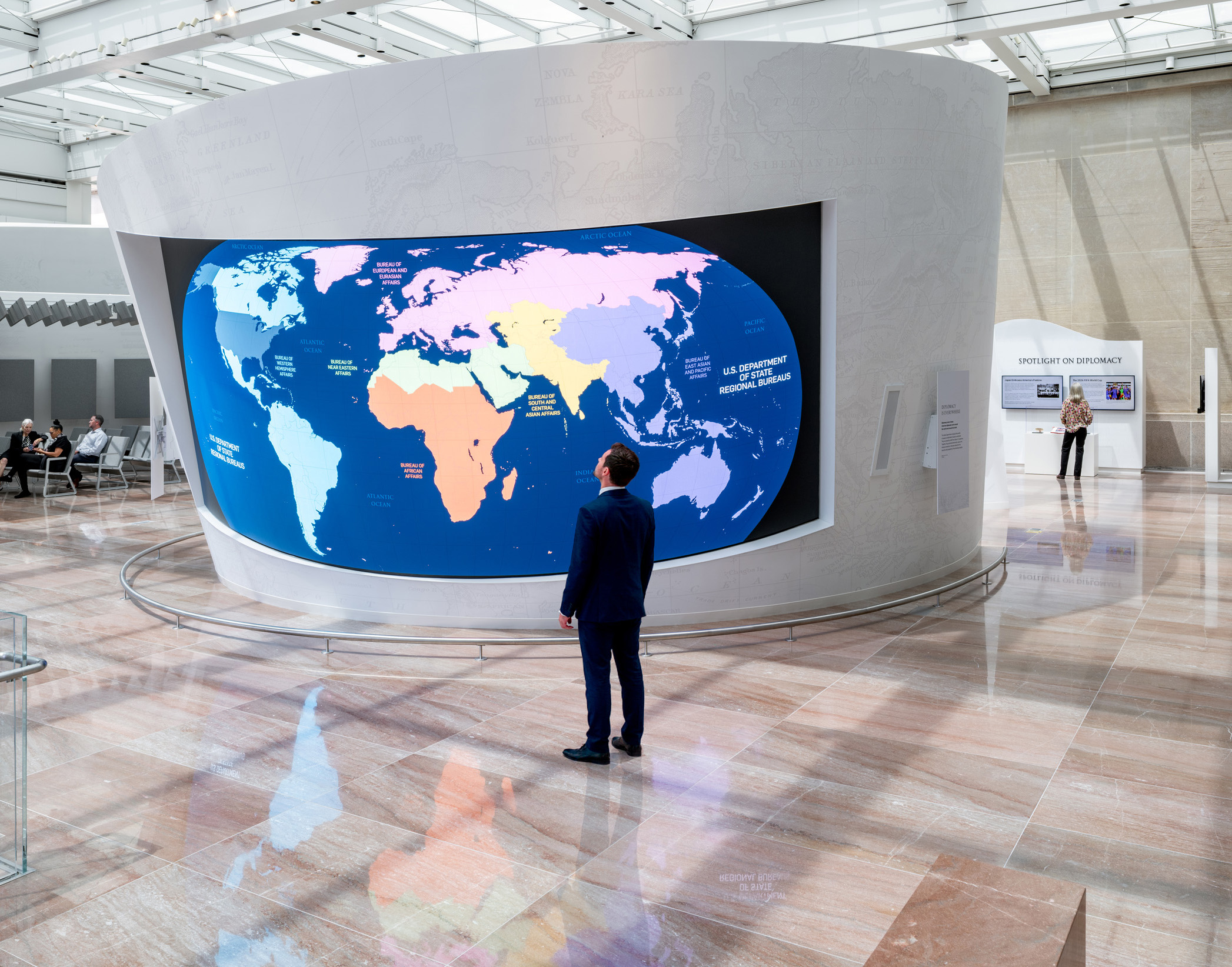
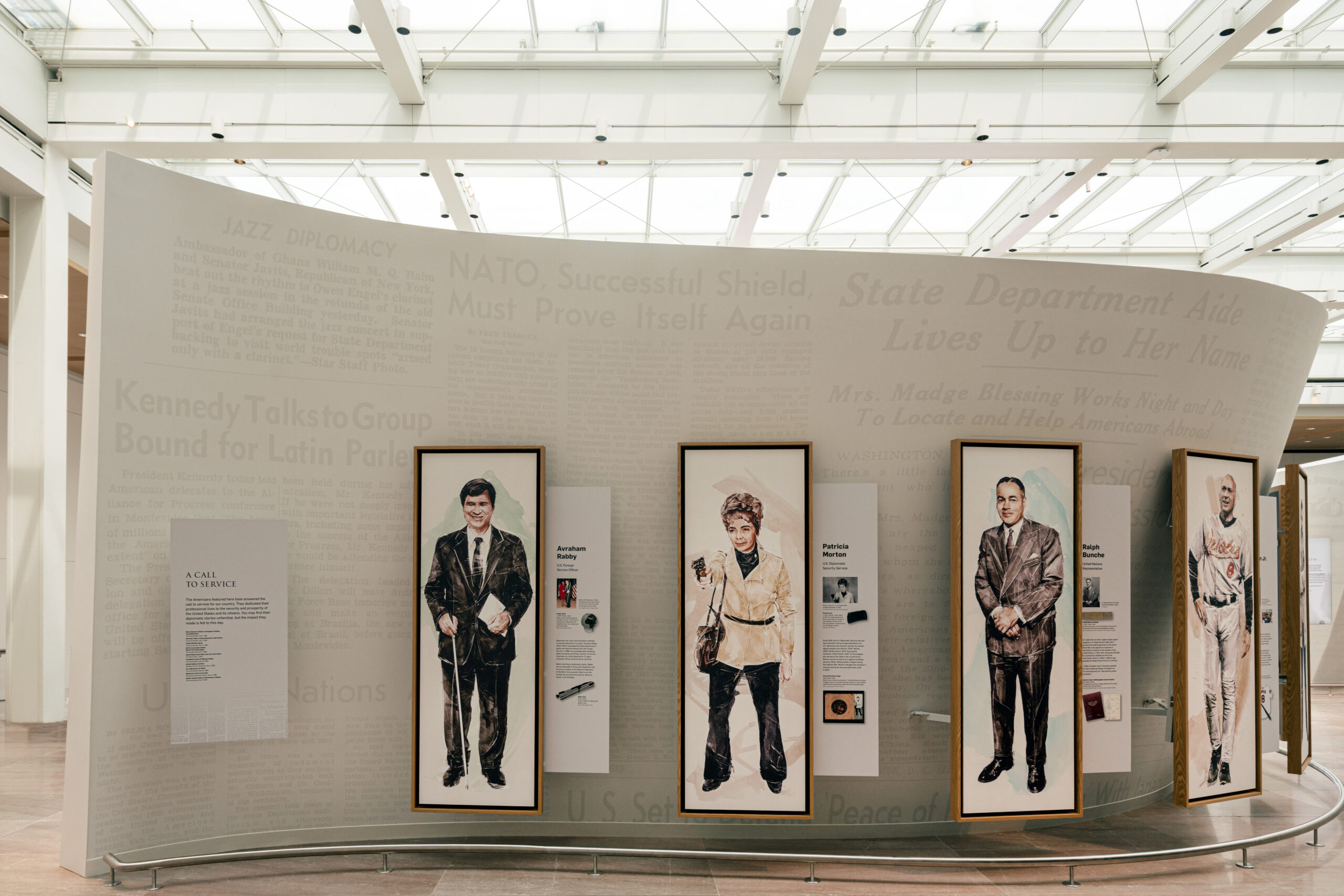
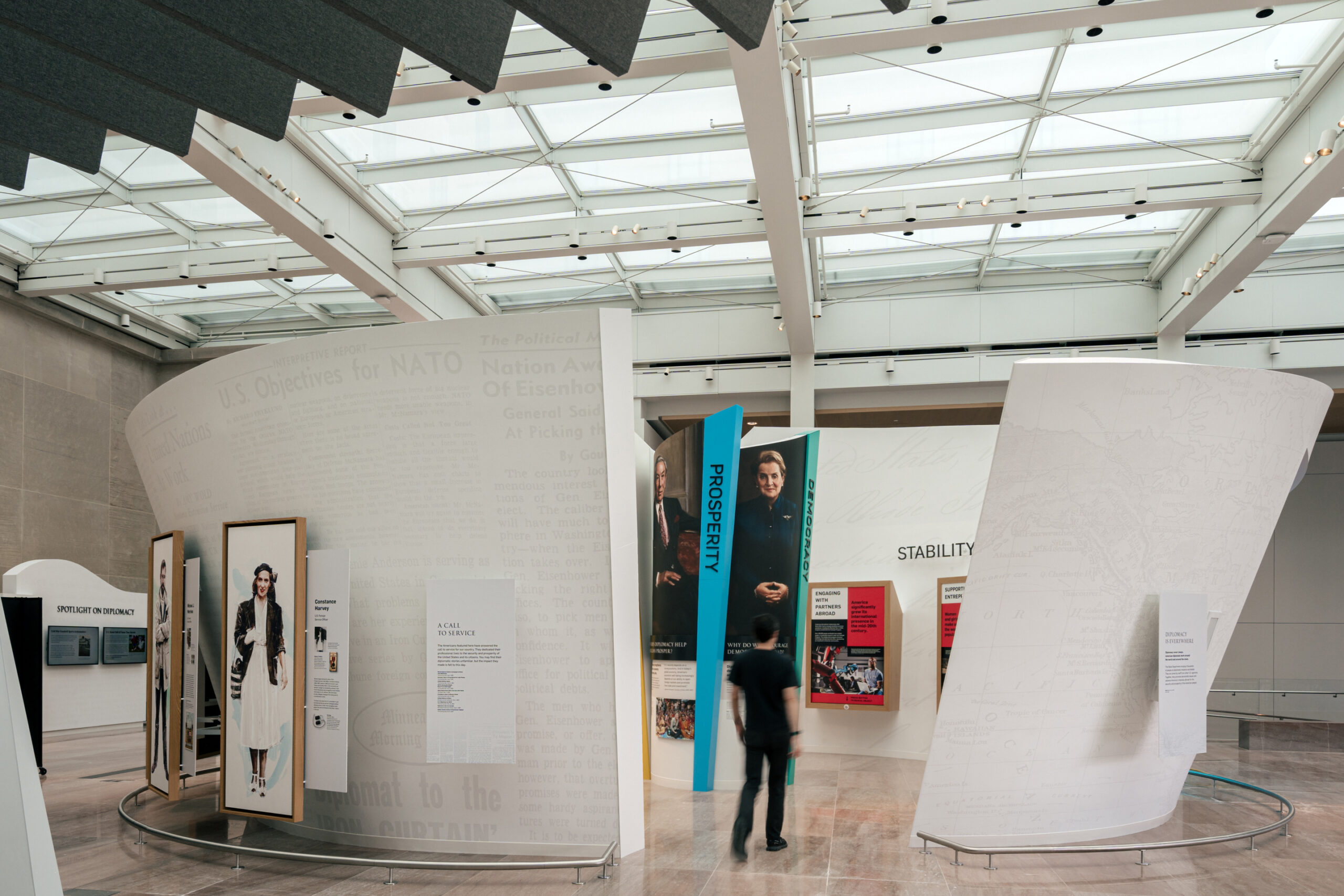
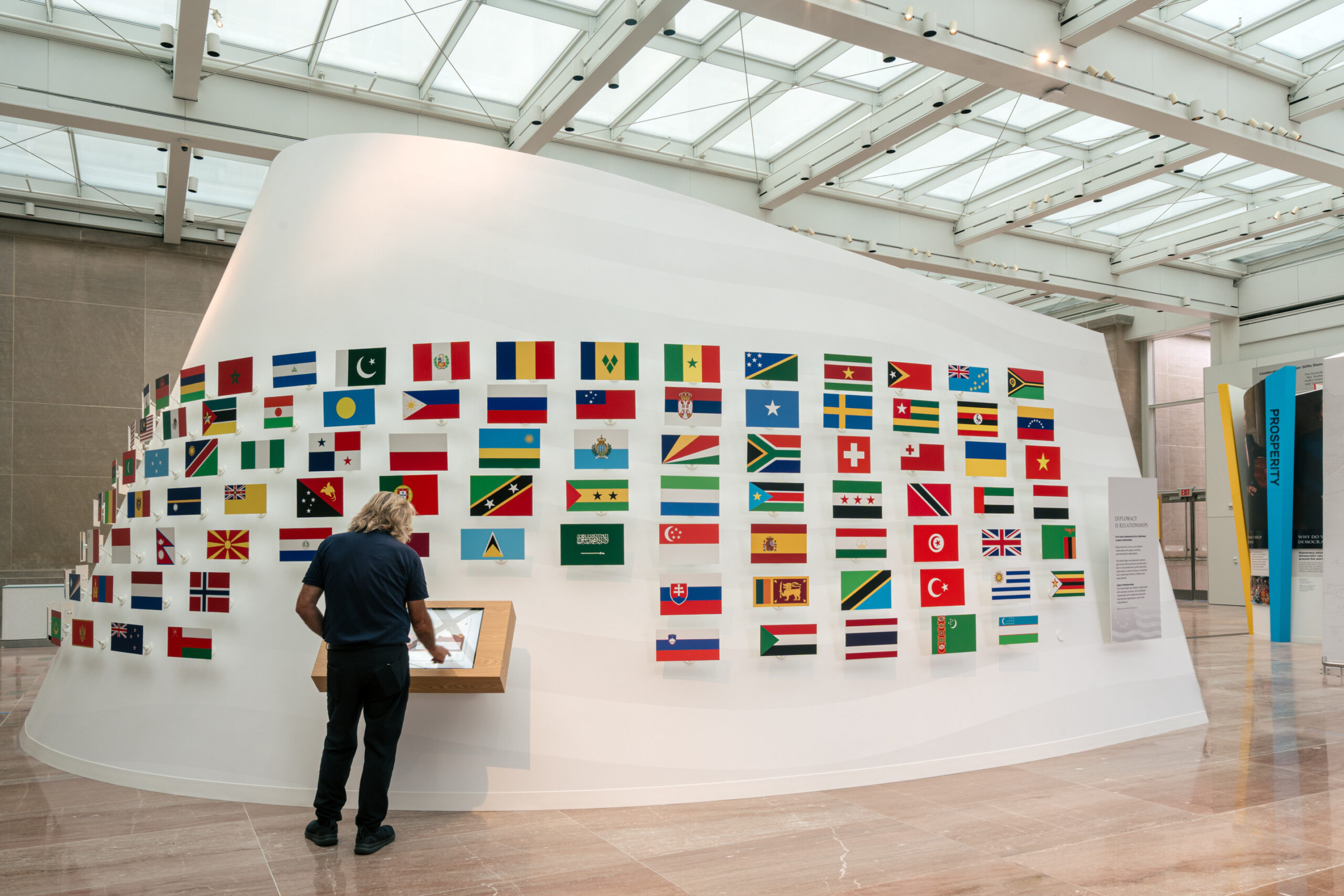
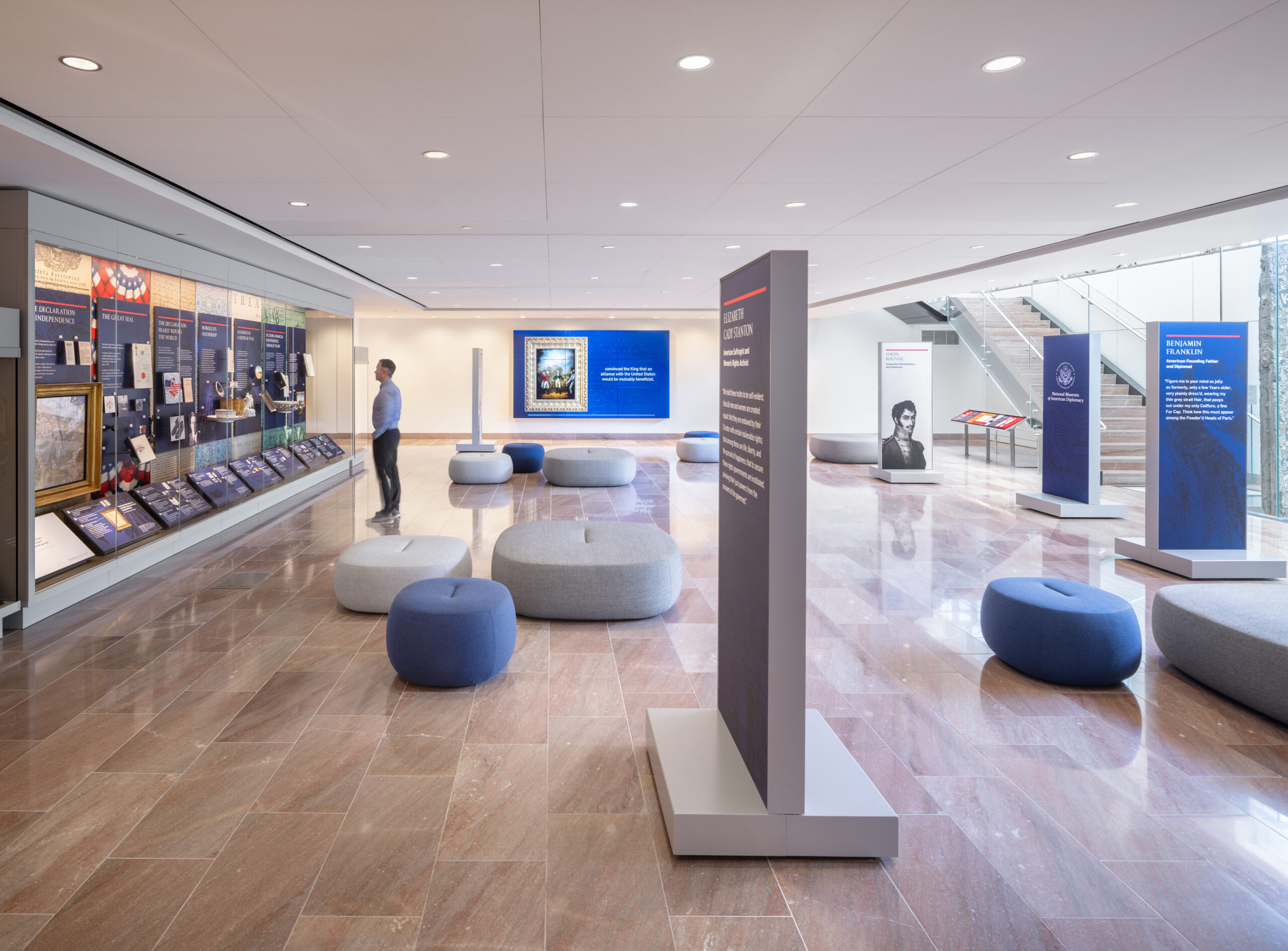
Within the museum, the firm developed a family of sweeping, complex-curved forms inspired by the foundational documents and objects through which diplomacy is recorded and enacted: treaties, visas, maps, flags, and passports. Enlarged to an architectural scale, they give physical presence to the agreements, identities, and boundaries that structure diplomatic life. Subtle tone-on-tone graphics across their surfaces reinforce this idea, while interactive elements treated in wood introduce a more tactile, human scale through interactive components and artifact displays.
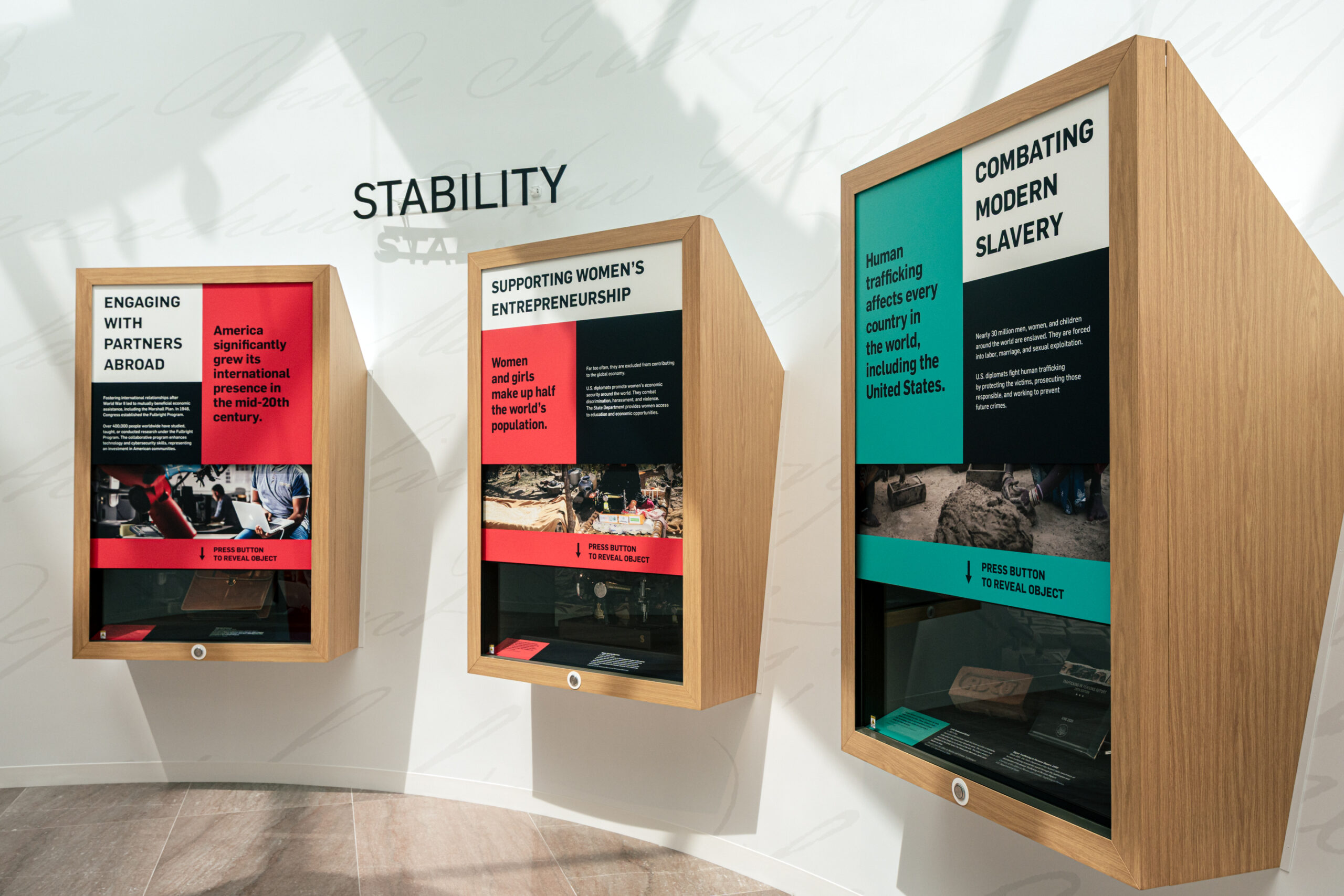
Developed as an integral element of the overall space designed by BBB, the exhibition works with the architecture to create a civic setting that is at once informative, welcoming, and active—introducing visitors to the structures of diplomacy while serving as a backdrop to the diplomatic relationships continuing around them. The exhibition is organized around four principal areas of diplomatic activity—security, prosperity, democracy, and stability—with interactive displays, artifacts, and media illustrating how each operates in practice.
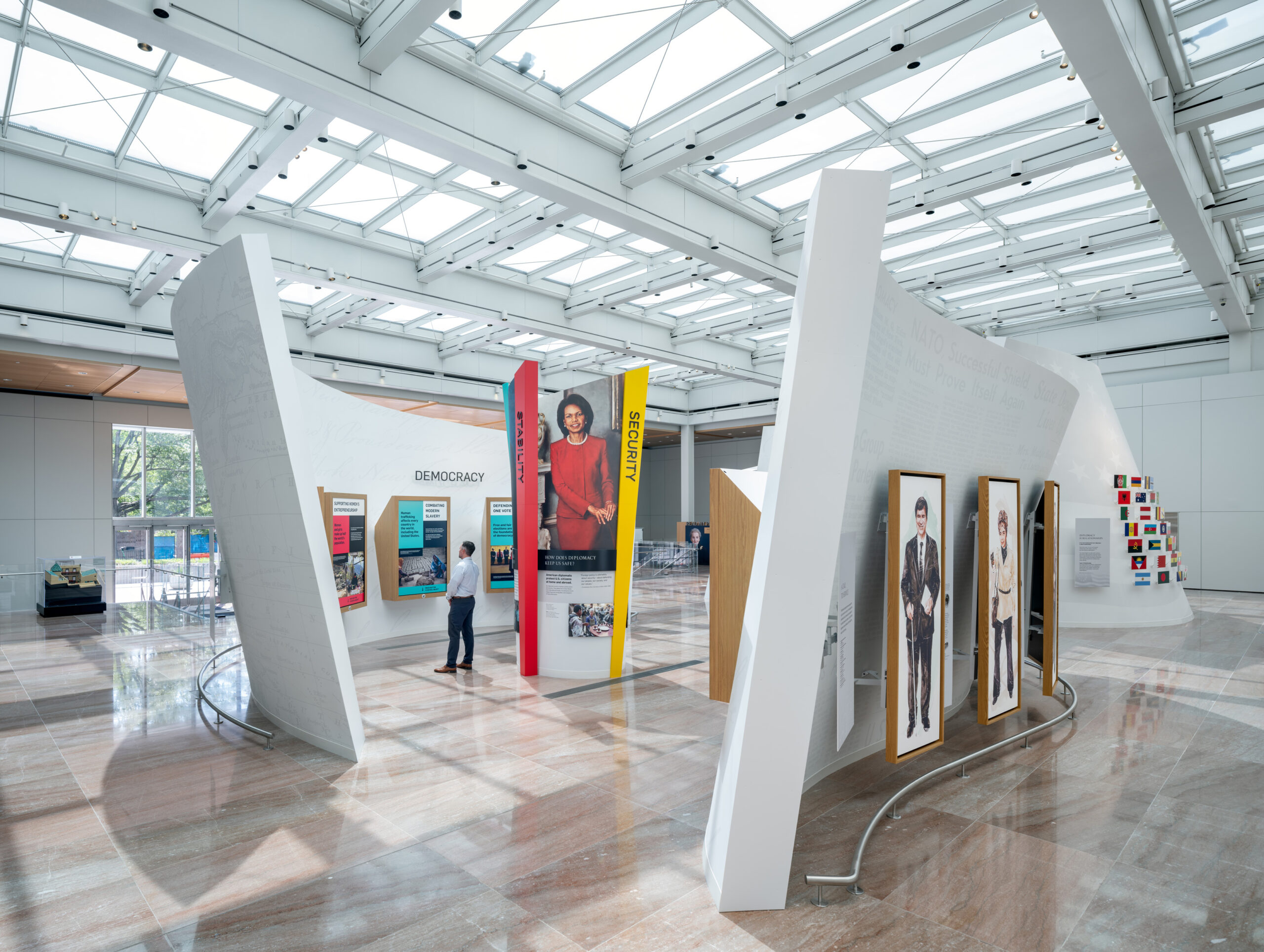
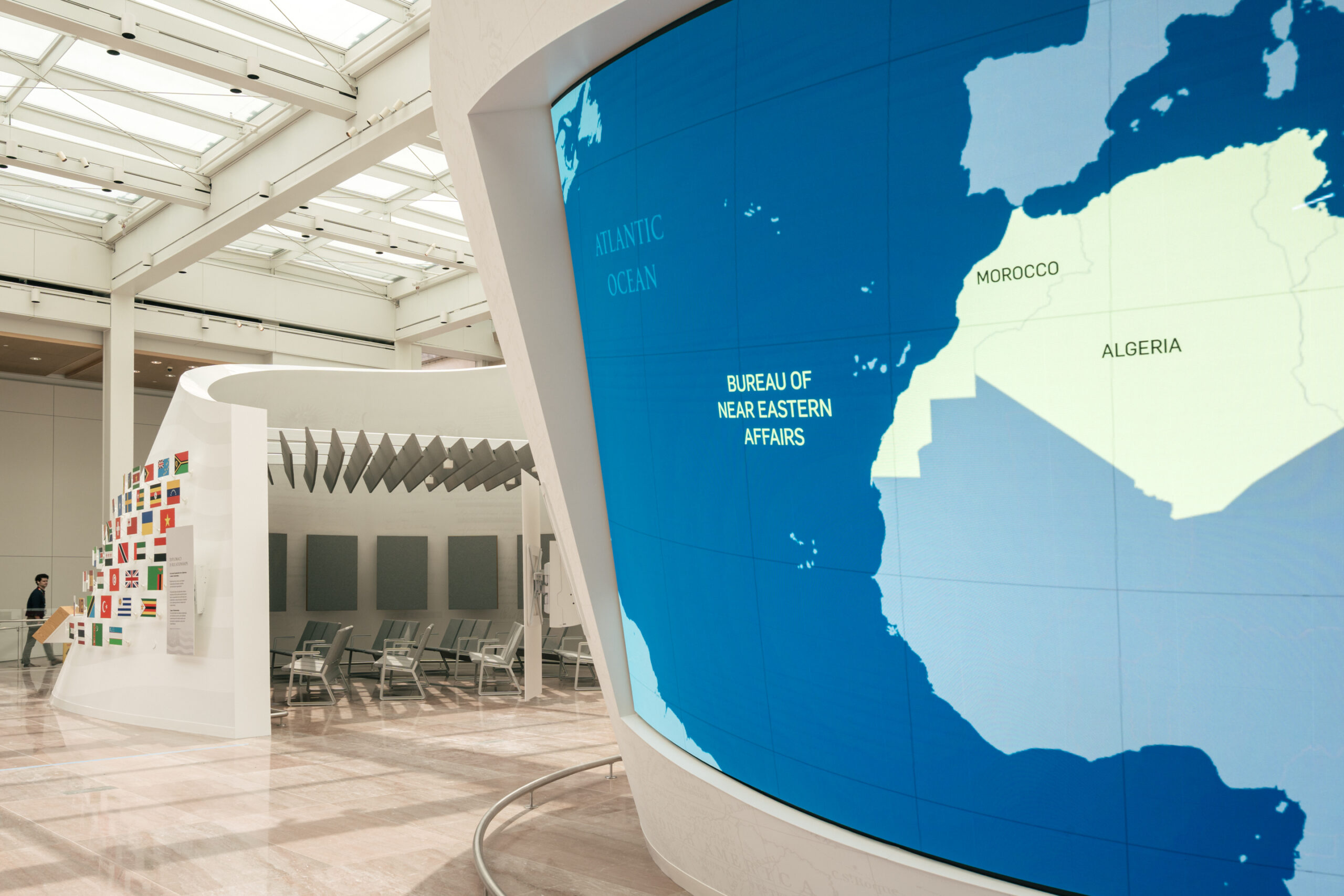
A large, animated global map, in the form of a convex, tilting, high-brightness LED system, traces the evolving presence of U.S. embassies, consulates, and missions around the world, while an interactive field of national flags makes the breadth of current diplomatic relationships immediately visible. Together, these elements present diplomacy as a living global network—one that changes continually as relationships, priorities, and circumstances evolve.
The project is the result of a 21-year collaboration with the DC office of Beyer Blinder Belle Architects & Planners (BBB). BBB’s museum pavilion design has a symmetrical, classically modern simplicity that complements the Art Moderne architecture of the Truman Building—mirroring the practice of diplomacy by offering a gracious new front door to the previously austere environment.
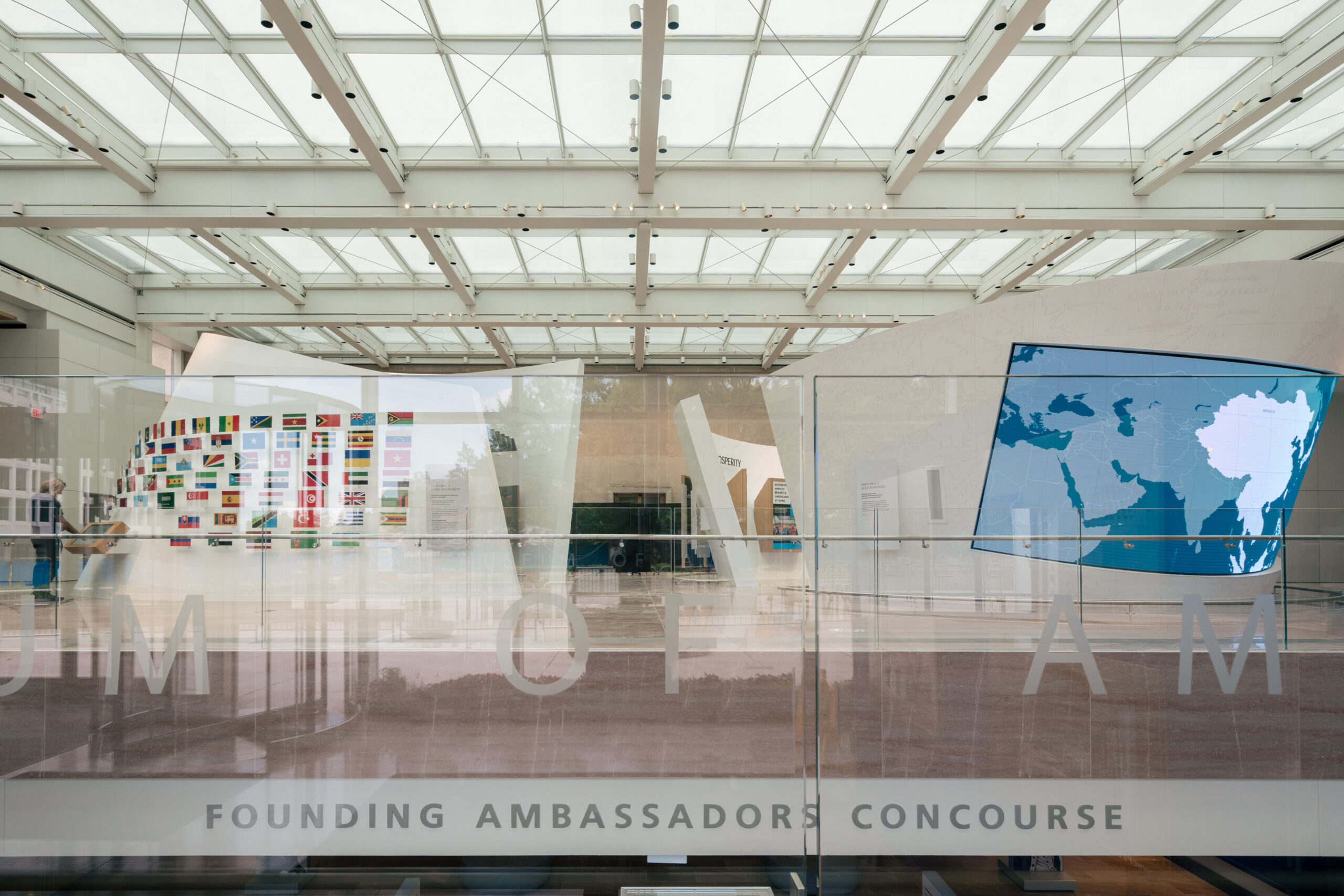
The pavilion creates a more welcoming entry, indicating NMAD’s mission to make diplomacy more transparent and responsive to the public. As the museum itself commemorates the history of diplomacy to lay the groundwork for future peace, its architecture builds on the visual language of the historic building to evolve it into the future.